



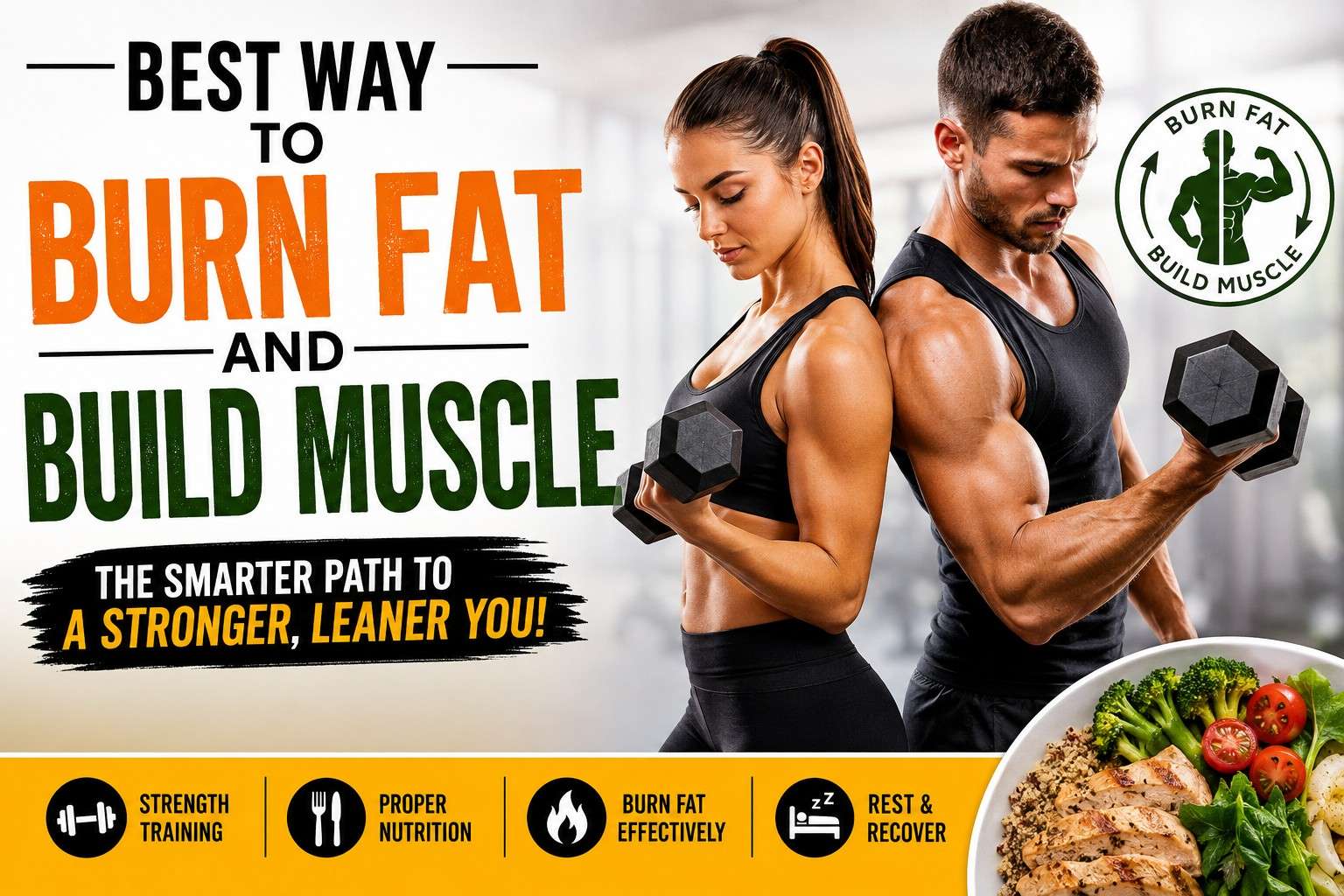
Best Way to Burn Fat and Build Muscle
Want to find the best way to burn fat and build muscle while maintaining lean muscle mass? The key isn’t extreme dieting or endless cardio. A smarter combination of strength training, adequate protein, daily movement, and recovery can help you work toward both goals at the same time.
Finding the best way to burn fat and build muscle can feel confusing because many fitness plans focus on only one goal. Fat loss usually requires eating fewer calories than your body uses, while muscle growth needs enough nutrition and resistance training. Fortunately, these goals can work together when your approach is balanced. Instead of drastically cutting food or spending hours doing cardio, focus on building sustainable habits that support your metabolism, strength, and overall fitness.
Can You Burn Fat and Build Muscle at the Same Time?
Yes, it is possible for some people to reduce body fat while gaining or maintaining muscle. This process is often called body recomposition.
However, results can vary depending on your current body composition, training experience, nutrition, sleep, and consistency. Beginners may notice changes relatively quickly because their bodies respond strongly to resistance training. Meanwhile, experienced lifters may need a more carefully structured nutrition and workout program.
The goal isn’t simply to make the number on the scale drop. Instead, pay attention to measurements, strength, how your clothes fit, and changes in body composition.
The Best Way to Burn Fat and Build Muscle
A successful approach usually combines four major areas:
- Strength training
- Adequate protein
- A moderate calorie deficit
- Recovery and daily movement
When these pieces work together, you can support fat loss while giving your muscles the nutrients and training stimulus they need.
1. Prioritize Strength Training
Resistance training should be one of the foundations of your routine. Exercises such as squats, lunges, rows, presses, deadlifts, and push-ups work multiple muscle groups and can help you become stronger.
You don’t necessarily need to spend hours in the gym. A consistent routine performed several times per week can be effective.
Start with manageable weights and focus on proper technique. Then, gradually increase resistance, repetitions, or training difficulty as your fitness improves.
This gradual progression is important because muscles need a reason to adapt. Simply repeating the same workout forever may eventually produce fewer improvements.
2. Eat Enough Protein
Protein provides amino acids that your body uses to repair and maintain muscle tissue. Therefore, getting enough protein is particularly important when you’re trying to lose fat while preserving lean mass.
Good protein-rich choices include:
- Eggs
- Chicken breast
- Turkey
- Fish
- Greek yogurt
- Cottage cheese
- Lean beef
- Tofu
- Tempeh
- Beans and lentils
- Protein-rich dairy products
Try to include a source of protein in each main meal. Combining protein with vegetables, whole grains, fruit, and healthy fats can also make meals more satisfying.
Your exact protein needs depend on factors such as body weight, activity level, age, and overall health. If you’re unsure about your nutritional needs, a registered dietitian can help you create an appropriate plan.
Create a Moderate Calorie Deficit
A calorie deficit means consuming fewer calories than your body uses over time. This is an important part of fat loss.
However, a very aggressive deficit isn’t necessarily better. Cutting calories too drastically can make it harder to train effectively, recover properly, and maintain muscle.
Instead, aim for a sustainable approach. Build meals around lean protein, vegetables, fruits, whole grains, and minimally processed foods. At the same time, pay attention to portion sizes and calorie-dense foods.
You don’t need to eliminate carbohydrates or fats to lose body fat. Both can fit into a balanced diet.
Choose Filling Foods
Foods with plenty of protein and fiber can help you feel satisfied for longer.
For example, instead of having a highly processed snack that provides little satiety, consider Greek yogurt with berries, an apple with a small amount of nut butter, or vegetables with hummus.
Small substitutions can make your diet easier to maintain without making every meal feel restrictive.
Add Cardio Without Overdoing It
Cardiovascular exercise can support calorie expenditure and improve heart health. Walking, cycling, swimming, jogging, dancing, and other activities can all contribute to an active lifestyle.
However, you don’t need to rely entirely on cardio for fat loss.
A combination of resistance training and moderate cardio may be more practical for someone who wants to improve body composition. For example, you might perform strength workouts several days per week while adding walking or other enjoyable cardiovascular activities.
The best routine is one you can consistently follow.
Increase Your Daily Movement
You don’t have to consider exercise as something that happens only during a gym session.
Walking more throughout the day can increase your overall activity. Take short walking breaks, use stairs when practical, walk while talking on the phone, or take an evening walk after dinner.
These small habits can add up.
For people who spend much of the day sitting, increasing daily movement can be a simple way to become more active without adding another intense workout.
Don’t Ignore Sleep
Sleep is often overlooked when people focus on fat loss and muscle building.
Your body needs adequate rest to recover from training. Poor sleep can also affect energy, appetite, and your ability to stay consistent with healthy habits.
Aim for a regular sleep schedule and create a relaxing bedtime routine. Keep your bedroom comfortable and reduce unnecessary screen time before bed if it interferes with your ability to fall asleep.
While sleep alone won’t burn significant amounts of fat, good recovery can make your overall fitness routine easier to maintain.
Build Your Meals Around Whole Foods
You don’t have to follow a complicated diet to improve your body composition.
A simple plate can include:
- A lean protein source
- Plenty of vegetables
- A moderate serving of carbohydrates
- A source of healthy fat
For example, grilled chicken with brown rice and vegetables can make a balanced meal. Another option could be salmon with potatoes and a large salad.
Likewise, a breakfast containing eggs, whole-grain toast, and fruit can provide protein, carbohydrates, and fiber.
The goal is consistency rather than perfection.
Best Exercises for Fat Loss and Muscle Building
Compound movements are particularly useful because they involve multiple muscle groups at once.
Squats
Squats train the legs and hips while also challenging your core. Beginners can start with bodyweight squats before progressing to weighted variations.
Lunges
Lunges can strengthen the legs and improve balance. Reverse lunges may be a comfortable starting point for beginners.
Push-Ups
Push-ups work the chest, shoulders, triceps, and core. If standard push-ups are difficult, begin with an incline version.
Rows
Rows target the muscles of the upper back and can help improve pulling strength. Resistance bands, dumbbells, or gym machines can all be used.
Deadlift Variations
Deadlift movements train the hips, legs, and back. Because technique matters, beginners should learn proper form before adding significant weight.
How Often Should You Train?
There isn’t one perfect schedule for everyone. Your routine should match your fitness level, availability, and recovery ability.
A beginner might start with three full-body strength sessions per week. On other days, walking or light cardio can provide additional movement.
As your fitness improves, you can adjust the frequency and volume of your workouts.
Remember that doing more isn’t automatically better. Training without enough recovery can make it harder to perform well and remain consistent.
Common Mistakes to Avoid
Cutting Calories Too Aggressively
Extreme dieting may produce quick scale changes, but it can be difficult to maintain and may make preserving muscle more challenging.
Doing Only Cardio
Cardio is valuable, but resistance training is important when your goal includes maintaining or developing muscle.
Ignoring Protein
A diet lacking adequate protein can make your muscle-building and muscle-maintenance goals more difficult.
Changing Your Plan Every Week
Results take time. Constantly jumping from one diet or workout program to another makes it difficult to determine what works.
Focusing Only on the Scale
Body weight can fluctuate because of water, food, sodium, and other factors. Track additional indicators such as waist measurements, progress photos, strength improvements, and how your clothes fit.
A Simple Weekly Approach
You can create a straightforward routine without making fitness overly complicated.
Monday: Full-body strength training + walking
Tuesday: Moderate cardio or longer walk
Wednesday: Full-body strength training
Thursday: Light activity and recovery
Friday: Full-body strength training + walking
Saturday: Enjoyable cardio or outdoor activity
Sunday: Rest and recovery
Adjust this structure according to your fitness level and schedule. Beginners should start gradually rather than immediately adopting a demanding routine.
Stay Consistent With Your Nutrition
One of the most important parts of the best way to burn fat and build muscle is choosing an eating pattern you can maintain.
You don’t need to avoid every food you enjoy. Instead, make nutritious foods the foundation of your diet and enjoy treats occasionally.
Meal preparation can also help. Preparing protein sources, vegetables, and healthy carbohydrates ahead of time makes it easier to create balanced meals when you’re busy.
Drink enough water throughout the day, particularly when you’re exercising or in hot weather. Staying hydrated supports normal bodily functions and can make workouts more comfortable.
Track Progress the Right Way
Progress isn’t always obvious from day to day.
Consider tracking your:
- Body measurements
- Workout performance
- Strength levels
- Progress photos
- Body weight trends
- Energy levels
- Clothing fit
Take measurements under similar conditions and compare changes over several weeks rather than judging yourself based on one day.
If your strength is improving while your waist measurement gradually decreases, that can be a positive sign even if your scale weight changes very little.
Give Your Body Time
There is no overnight shortcut for losing body fat and developing muscle.
The best way to burn fat and build muscle is usually a combination of sensible nutrition, progressive resistance training, adequate protein, regular movement, and recovery.
Focus on habits you can repeat for months rather than strategies designed to produce dramatic changes in a few days.
A Weight Loss Product to Consider
If you’re already working on nutrition, exercise, and healthy lifestyle habits, you may also come across weight-loss supplements marketed for additional support. One example is LeanBiome, a dietary supplement marketed around gut-health and weight-management support.
Supplements should not replace a balanced diet, regular physical activity, or professional medical advice. Before using any weight-loss product, check the ingredients and consider discussing it with a qualified healthcare professional, especially if you take medications or have an existing health condition.
The foundation remains the same: eat nutritious foods, train consistently, recover well, and give your body enough time to adapt.