



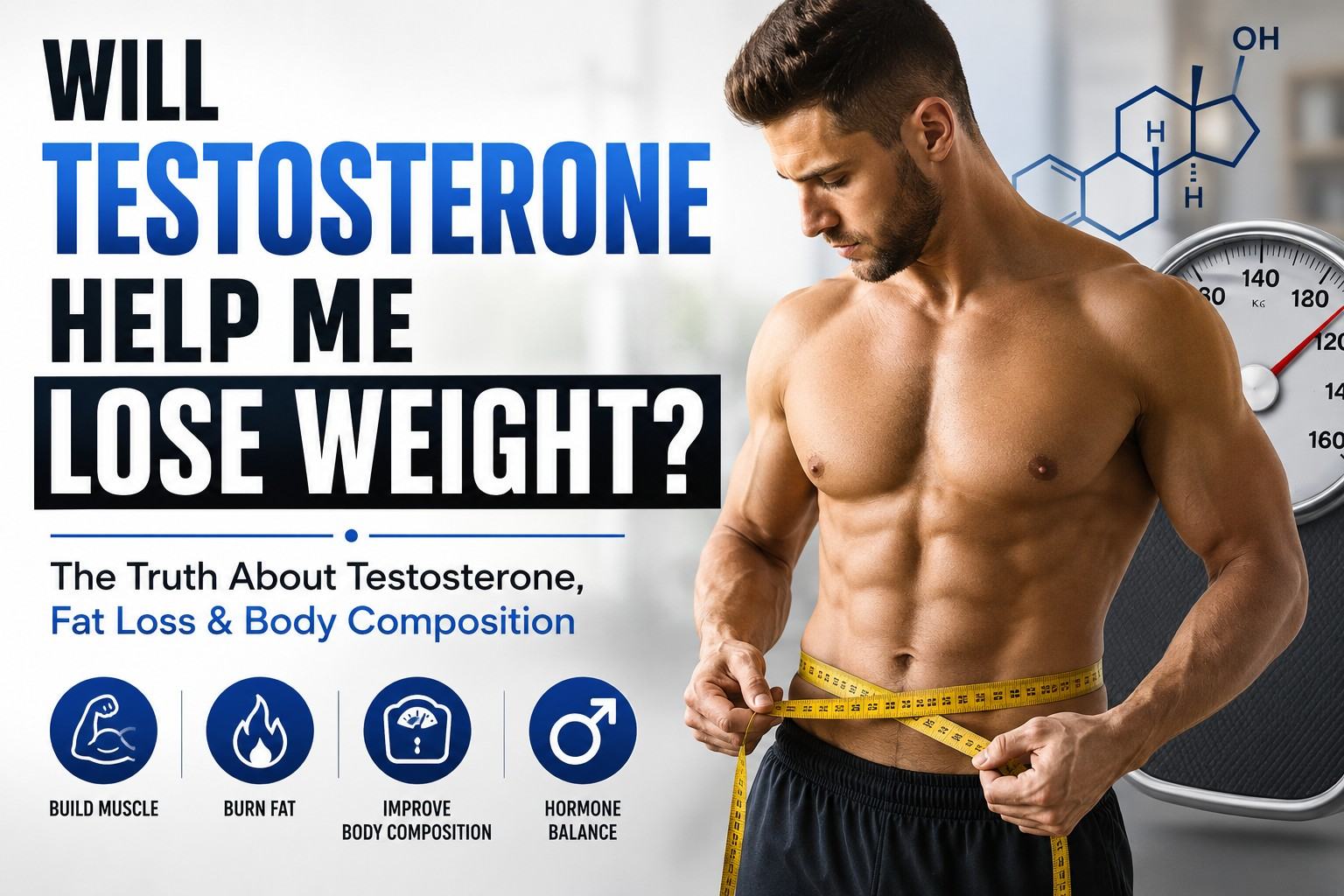
Will Testosterone Help Me Lose Weight?
Will testosterone help me lose weight if a hormone imbalance is making weight management harder? Testosterone plays an important role in muscle mass, fat distribution, and overall body composition. However, that does not mean taking testosterone is a simple weight-loss solution.
Will testosterone help me lose weight is a common question, particularly among men who have low testosterone and are also struggling with excess weight. The short answer is: testosterone therapy may help improve body composition in some men with medically diagnosed testosterone deficiency, but it should not be viewed as a standard weight-loss treatment. Research suggests that testosterone treatment can increase lean mass and reduce fat mass in certain men, although results vary.
If you are considering testosterone for weight management, it is important to understand why testosterone levels may be low, how treatment works, and what safer weight-loss strategies should come first.
What Is Testosterone?
Testosterone is a hormone that plays several important roles in the body. Although it is commonly associated with male sexual development, it also affects muscle mass, bone health, fat distribution, red blood cell production, and other functions.
Testosterone levels naturally vary between individuals and can change with age. In addition, obesity and certain medical conditions can be associated with lower testosterone levels.
However, having excess weight does not automatically mean that someone needs testosterone replacement therapy.
The Endocrine Society recommends diagnosing hypogonadism based on both symptoms and consistently low testosterone levels confirmed through appropriate testing.
Symptoms of Low Testosterone
Low testosterone can be associated with symptoms such as:
- Reduced sexual desire
- Lower energy
- Reduced muscle mass
- Decreased strength
- Changes in mood
- Difficulty concentrating
- Reduced body hair
- Changes in sexual function
These symptoms can also have many other causes. Therefore, experiencing one or more of them does not automatically mean testosterone is low.
A healthcare professional can evaluate symptoms and order appropriate blood tests when necessary.
Can Low Testosterone Contribute to Weight Gain?
There appears to be a relationship between low testosterone and excess body fat. However, the relationship can work in both directions.
For example, obesity can be associated with lower testosterone levels. At the same time, testosterone deficiency can contribute to changes in body composition, including reduced lean mass and increased fat mass.
This creates an important distinction.
Simply having excess body fat does not necessarily mean testosterone therapy is the appropriate solution. In fact, the Endocrine Society’s 2026 statement notes that for men with hypogonadism associated with overweight or obesity and no other identified cause, weight loss is typically the first-line approach.
Will Testosterone Help Me Lose Weight?
So, will testosterone help me lose weight if my testosterone level is low?
Possibly, but the answer depends on the individual.
Clinical research has found that testosterone therapy can change body composition in some men with testosterone deficiency. For example, a randomized controlled trial involving obese men with low testosterone found that testosterone treatment during a weight-loss program was associated with greater reductions in fat mass and better preservation or regain of lean mass compared with placebo.
A systematic review and meta-analysis of randomized controlled trials also found that testosterone replacement was associated with an increase in lean body mass and improvements in waist circumference and BMI, although the researchers noted substantial variation between studies.
Therefore, testosterone may influence where weight comes from, particularly the balance between fat and lean tissue, rather than simply acting like a conventional weight-loss medication.
Testosterone and Body Composition
One reason testosterone can appear helpful for weight management is its relationship with muscle and fat.
It May Support Lean Muscle
Testosterone has an important role in maintaining muscle mass. In men with genuine testosterone deficiency, appropriate treatment can help restore testosterone levels and may improve lean body mass.
More lean tissue can also support physical activity and strength training.
However, this does not mean that testosterone automatically produces significant weight loss. A person can gain muscle while losing fat without seeing a dramatic change on the scale.
It May Reduce Fat Mass
Some studies have reported reductions in fat mass among men with obesity and low testosterone who receive testosterone therapy.
In one randomized controlled trial, participants receiving testosterone lost more fat mass than those receiving placebo during a structured weight-loss program.
However, these findings apply to specific groups of men with low testosterone. They should not be interpreted as evidence that healthy people should take testosterone simply to lose weight.
Does Testosterone Increase Metabolism?
This is another common question.
Testosterone can influence muscle mass and body composition, which may indirectly affect energy expenditure. However, it is too simplistic to say that testosterone is a metabolism-boosting weight-loss treatment.
Your daily energy needs depend on many factors, including:
- Body size
- Muscle mass
- Physical activity
- Age
- Diet
- Sleep
- Genetics
- Overall health
Therefore, improving testosterone levels when medically appropriate may support healthier body composition, but it does not replace a calorie-controlled eating pattern and regular physical activity.
Testosterone Therapy Is Not for Everyone
If you are wondering will testosterone help me lose weight, it is important to separate medically indicated testosterone replacement from testosterone products marketed for fitness or weight loss.
Testosterone therapy is generally intended for men who have confirmed testosterone deficiency and appropriate symptoms or underlying conditions.
The Endocrine Society recommends confirming consistently low testosterone with accurate testing and investigating the underlying cause before treatment.
That means you should not start testosterone simply because you have gained weight, feel tired, or want to build more muscle.
Why Medical Evaluation Matters
Low testosterone can have several possible causes. Obesity, certain medications, pituitary problems, testicular disorders, and other health conditions can contribute to hormonal changes.
Finding the underlying cause is therefore an important part of treatment.
In addition, testosterone therapy requires medical monitoring because it can have risks and may not be appropriate for everyone. The Endocrine Society specifically recommends weighing potential benefits and risks before treatment.
Can Weight Loss Naturally Improve Testosterone?
Interestingly, the relationship between testosterone and weight loss also works in the opposite direction.
Losing excess body fat may help improve testosterone levels in some men. Research has shown that weight loss from lifestyle changes can be associated with increases in testosterone.
This means that improving diet, increasing physical activity, and reducing excess body fat may be useful not only for weight management but also for overall metabolic health.
Consequently, it makes sense to focus on sustainable lifestyle habits rather than immediately looking for hormone-based solutions.
How to Support Healthy Testosterone Levels Naturally
If your goal is healthier hormone function and better weight management, several basic habits can help.
1. Prioritize Strength Training
Resistance exercise can help build and maintain muscle. It is particularly useful during weight loss because maintaining lean mass can help preserve strength and physical function.
Aim for consistent strength-training sessions rather than relying only on cardio.
2. Eat Enough Protein
Protein supports muscle maintenance and recovery. Include foods such as eggs, poultry, fish, Greek yogurt, beans, lentils, tofu, and lean meats according to your dietary preferences.
A balanced diet is more useful than relying on one supplement or ingredient.
3. Create a Sustainable Calorie Deficit
Weight loss ultimately requires your body to use more energy than it receives over time.
Instead of drastically cutting calories, focus on portions, nutrient-dense foods, adequate protein, vegetables, fruits, whole grains, and minimally processed foods.
4. Get Enough Sleep
Poor sleep can make weight management more difficult and may affect several hormones involved in appetite, energy, and metabolism.
A consistent sleep schedule can therefore be an important part of a weight-loss plan.
5. Stay Physically Active
Walking, cycling, swimming, recreational sports, and other activities can increase daily energy expenditure.
Even small increases in everyday movement can add up when maintained consistently.
What About Testosterone Supplements?
Be careful with products advertised as “testosterone boosters.”
Many supplements marketed for testosterone support contain combinations of vitamins, minerals, herbs, or other ingredients. Their effectiveness can vary, and they are not equivalent to medically prescribed testosterone therapy.
If you suspect low testosterone, getting evaluated by a qualified healthcare professional is more appropriate than attempting to diagnose yourself based on supplement advertising.
Will Testosterone Help Me Lose Weight Without Diet and Exercise?
Probably not in the way many advertisements suggest.
Even studies showing favorable changes in body composition generally involve men with low testosterone and structured weight-management programs. Testosterone should not be considered a replacement for healthy eating, exercise, or other evidence-based weight-management strategies.
Also, some benefits seen during testosterone treatment may not continue after treatment stops. One follow-up study found that favorable body-composition differences were no longer apparent after testosterone therapy was discontinued.
That is another reason to think of testosterone therapy as treatment for a medical condition rather than a quick weight-loss shortcut.
When Should You Talk to a Doctor?
Consider speaking with a healthcare professional if you have persistent symptoms that could indicate testosterone deficiency, particularly when they occur alongside changes in sexual function, muscle mass, strength, or energy.
A doctor can determine whether testosterone testing is appropriate and investigate other possible causes of your symptoms.
Do not begin testosterone therapy solely because you want to lose weight or build muscle faster.
The Bottom Line
So, will testosterone help me lose weight?
For some men with confirmed testosterone deficiency, testosterone therapy may improve body composition by increasing lean mass and reducing fat mass. However, the evidence does not support treating testosterone as a general-purpose weight-loss drug. The benefits and risks need to be considered individually, and proper diagnosis is essential.
For most people trying to lose weight, the foundation remains a nutritious eating pattern, regular physical activity, adequate sleep, and sustainable calorie control. If low testosterone is suspected, medical evaluation can help determine whether hormone treatment is actually appropriate.
Weight Loss Product to Consider
If you’re looking for additional support alongside a balanced diet and regular exercise, LeanBiome is a weight-management supplement you could consider. It is marketed around gut health and healthy weight management. However, it should be viewed as an optional supplement rather than a replacement for proper nutrition, physical activity, or medical treatment.
Important: LeanBiome is not a testosterone supplement and should not be used to treat low testosterone. If you suspect low testosterone, speak with a healthcare professional about appropriate testing and treatment.