



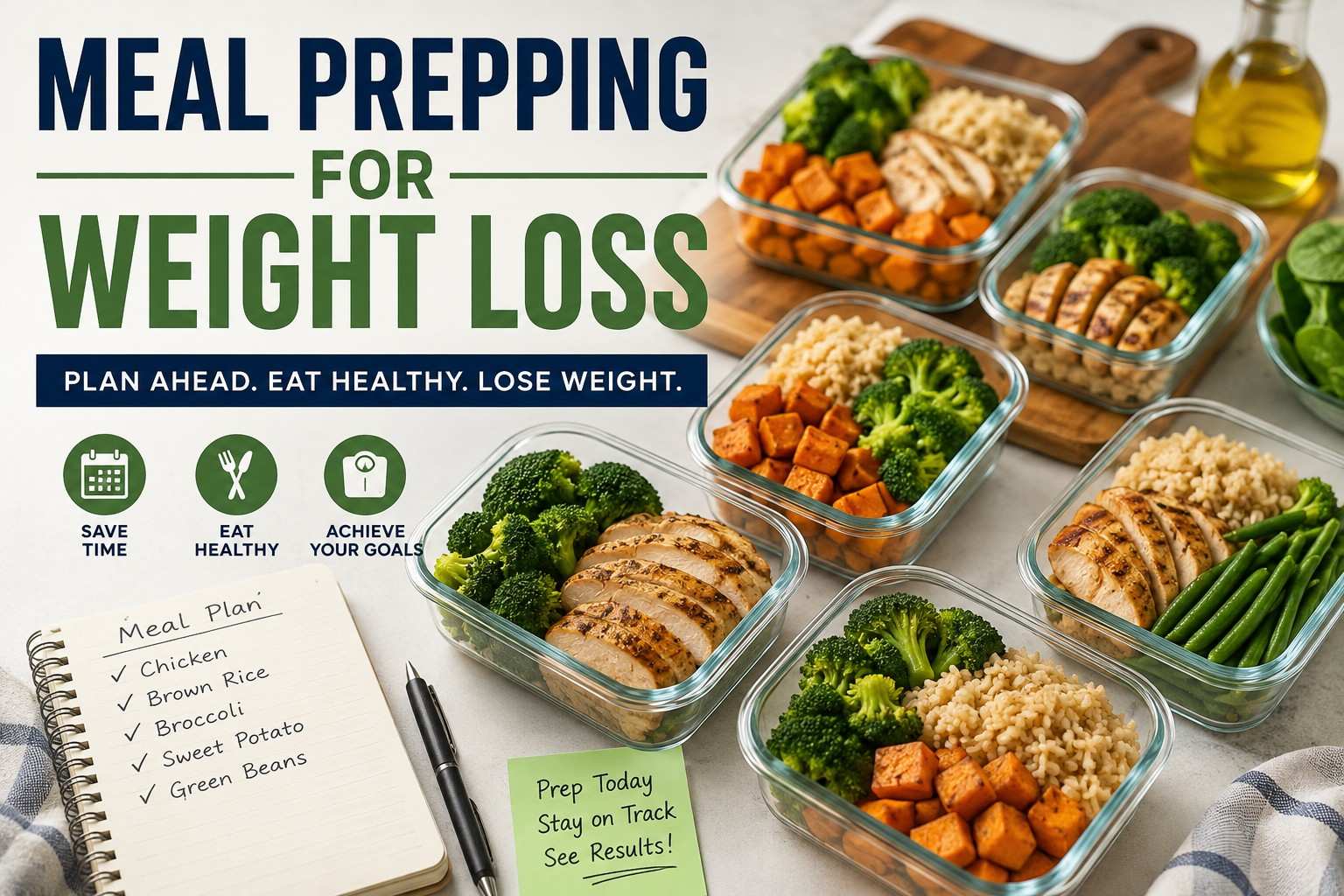
Meal Prepping for Weight Loss
Trying to eat healthier all week can become difficult when you’re busy, hungry, and surrounded by convenient takeout options. Meal prepping for weight loss gives you a simpler approach. Instead of deciding what to eat at every meal, you prepare balanced foods ahead of time and keep them ready when hunger strikes. As a result, you can make more thoughtful food choices while saving time during the week.
Meal prep does not have to mean eating the same chicken and vegetables every day. Instead, you can prepare a few versatile ingredients and combine them in different ways. With the right portions, enough protein, plenty of vegetables, and satisfying carbohydrates, meal prep can make a weight-conscious eating routine much easier to maintain.
What Is Meal Prepping for Weight Loss?
Meal prepping means preparing some or all of your meals in advance. Depending on your schedule, you might cook everything for the next three or four days, or simply prepare ingredients that can be assembled quickly.
For example, you could cook chicken, brown rice, roasted vegetables, and hard-boiled eggs on Sunday. Then, throughout the week, you can turn those ingredients into bowls, salads, wraps, or quick breakfasts.
The main advantage is consistency. When nutritious food is already available, you’re less likely to rely on fast food simply because you’re short on time.
However, meal prep should not be overly restrictive. Instead, focus on balanced meals that you actually enjoy eating.
Why Meal Prep Can Help With Weight Management
Weight management is influenced by many factors, including overall food intake, physical activity, sleep, and eating habits. Meal preparation can support these habits in several practical ways.
1. It Makes Portion Control Easier
When you prepare meals at home, you have more control over how much food goes into each container. Therefore, you can create portions that fit your personal needs rather than automatically accepting oversized restaurant servings.
You can also divide snacks into individual portions. This makes it easier to avoid eating directly from a large package.
2. It Reduces Last-Minute Decisions
After a long day, cooking a complete meal may feel like too much work. Consequently, ordering takeout can become an easy choice.
Prepared meals remove one of those barriers. Simply heat your food, add a salad or vegetables, and you’re ready to eat.
3. It Can Save Money
Meal prep can also reduce unnecessary spending. Buying ingredients in larger quantities and using them across several meals may cost less than purchasing lunch or dinner several times a week.
Moreover, planning meals before shopping can help prevent buying foods that eventually go unused.
4. It Encourages More Balanced Meals
A planned meal can include protein, vegetables, whole-food carbohydrates, and healthy fats. Therefore, you can create meals that are more satisfying than snacks or highly processed convenience foods.
How to Build a Weight-Loss-Friendly Meal
A useful meal-prep strategy is to build each meal around a few basic components.
Start With Protein
Protein can help make meals satisfying and is important for maintaining muscle while losing weight. Good options include:
- Chicken breast
- Turkey
- Eggs
- Greek yogurt
- Cottage cheese
- Tuna
- Salmon
- Tofu
- Beans and lentils
Choose the options you enjoy most. This makes your meal plan easier to follow over time.
Add Plenty of Vegetables
Next, add vegetables such as broccoli, spinach, carrots, peppers, green beans, zucchini, tomatoes, or cauliflower.
Vegetables provide fiber and add volume to meals. As a result, you can create filling plates without relying heavily on calorie-dense ingredients.
Include Smart Carbohydrates
Carbohydrates do not automatically prevent weight loss. Instead, portion size and overall food intake matter.
Good meal-prep choices include:
- Oats
- Brown rice
- Quinoa
- Potatoes
- Sweet potatoes
- Whole-grain bread
- Whole-grain tortillas
- Beans
Choose portions that work with your overall eating pattern and activity level.
Add Healthy Fats
Finally, include moderate portions of foods such as avocado, nuts, seeds, olive oil, or natural nut butter.
These foods can add flavor and satisfaction. However, because many sources of dietary fat are calorie-dense, portion sizes are especially useful to consider.
Easy Meal Prep Ideas for Weight Loss
If you’re new to meal preparation, keep things simple at first.
Breakfast Ideas
Breakfast can be prepared several days in advance. Try overnight oats made with oats, Greek yogurt, berries, and chia seeds.
Alternatively, prepare egg muffins with eggs, spinach, peppers, and other vegetables. Pair them with fruit for a convenient breakfast.
Another option is Greek yogurt with berries, oats, and a small portion of nuts.
Lunch Ideas
For lunch, try a chicken and rice bowl with roasted vegetables. You can change the seasoning throughout the week so the meals don’t feel repetitive.
A turkey whole-grain wrap with lettuce, tomato, cucumber, and a yogurt-based dressing is another simple option.
You can also prepare a large salad base and add different proteins each day.
Dinner Ideas
For dinner, prepare lean protein with vegetables and a carbohydrate source.
For example, baked salmon with roasted potatoes and broccoli makes a simple meal. Similarly, turkey chili with beans and vegetables can be divided into several containers and reheated later.
The key is variety. Consequently, you are more likely to continue your routine instead of getting bored.
A Simple 7-Day Meal Prep Plan
You don’t need seven completely different breakfasts, lunches, and dinners. Instead, prepare several ingredients and reuse them creatively.
Day 1: Overnight oats, chicken rice bowl, salmon with vegetables
Day 2: Egg muffins, turkey wrap, turkey and bean chili
Day 3: Greek yogurt bowl, chicken salad, salmon with potatoes
Day 4: Overnight oats, turkey rice bowl, chicken and vegetables
Day 5: Egg muffins, chicken wrap, turkey chili
Day 6: Greek yogurt with berries, salmon salad, chicken with sweet potato
Day 7: Oatmeal with fruit, leftover protein bowl, vegetable and bean soup
You can adjust these meals according to your calorie requirements, food preferences, allergies, and schedule.
How to Meal Prep Without Getting Bored
Eating the same meal repeatedly is one of the biggest reasons people abandon meal prep. Fortunately, you can avoid this without cooking completely different dishes every day.
First, prepare neutral ingredients. For example, grilled chicken can be used in salads, wraps, rice bowls, or tacos.
Next, change the flavors. Use salsa, lemon and herbs, low-sugar sauces, garlic, chili, or different spice combinations.
Also, rotate your vegetables. Instead of preparing only broccoli, combine broccoli with peppers, zucchini, carrots, spinach, and green beans.
Finally, keep a few quick foods available for variety. Frozen vegetables, canned tuna, eggs, Greek yogurt, and fruit can make it easier to create a meal when you don’t want to eat your prepared food.
Grocery Shopping Tips for Meal Prep
Before going to the grocery store, decide which meals you will prepare. Then create your shopping list based on those meals.
A basic list might include:
Protein: Chicken, eggs, Greek yogurt, turkey, salmon, beans
Vegetables: Broccoli, spinach, peppers, carrots, tomatoes
Carbohydrates: Oats, rice, potatoes, whole-grain wraps
Fruit: Berries, apples, bananas, oranges
Healthy fats: Avocado, nuts, seeds, olive oil
Buying only what you need can reduce food waste. Additionally, frozen fruits and vegetables can be useful because they last longer and often require little preparation.
Meal Prep Mistakes to Avoid
Making Every Meal Too Complicated
Meal prep should save time, not consume your entire weekend. Therefore, choose recipes with simple ingredients and repeat components when practical.
Cutting Calories Too Aggressively
Eating as little as possible is not a sustainable weight-loss strategy. Instead, aim for balanced meals that provide enough food to support your daily routine.
Ignoring Portion Sizes
Healthy foods can still contribute substantial calories when portions become very large. Consequently, pay attention to serving sizes, especially for calorie-dense foods such as oils, nuts, dressings, and nut butters.
Forgetting Food Storage
Prepared meals should be stored safely and refrigerated promptly. Use appropriate food containers and follow food-safety recommendations for storage and reheating.
How to Make Meal Prep Easier
Start with one or two meals rather than preparing every meal for an entire week.
For example, prepare breakfast and lunch for three days. Once that routine becomes comfortable, add dinner or snacks.
You can also use a simple preparation schedule:
Step 1: Choose your meals.
Step 2: Write your grocery list.
Step 3: Shop for the ingredients.
Step 4: Cook your main proteins and carbohydrates.
Step 5: Wash and prepare vegetables.
Step 6: Divide meals into containers.
Step 7: Refrigerate or freeze meals as appropriate.
This approach makes meal prepping for weight loss more manageable because you don’t have to change your entire routine overnight.
Healthy Snacks to Keep Ready
Snacks can also be prepared in advance. Convenient options include:
- Greek yogurt and berries
- Apple with a small amount of peanut butter
- Hard-boiled eggs
- Carrot and cucumber sticks with hummus
- Cottage cheese with fruit
- A small portion of nuts
- Fresh fruit
Preparing these foods ahead of time can make it easier to choose a satisfying snack instead of grabbing highly processed foods when you’re hungry.
Can Meal Prep Help You Stay Consistent?
Consistency is often more important than creating a perfect meal plan. A meal-prep routine gives you a practical system for making better choices repeatedly.
However, you don’t need to follow your plan perfectly. If you eat at a restaurant one evening or change your lunch, simply return to your routine at the next meal.
The goal is to create habits that fit your lifestyle. Therefore, choose foods you enjoy, prepare realistic portions, and allow enough flexibility for social events and unexpected schedule changes.
Weight Loss Product to Consider
Alongside balanced meals and regular physical activity, some people choose to use convenient nutrition products to make their routines easier. One example is Lanta Flat Belly Shake, a meal-shake product that can be considered as a convenient option when you’re looking for an easy breakfast or snack alternative.
If you choose a weight-loss product, check the ingredient list, nutrition information, serving size, and any relevant dietary considerations before using it. A supplement or meal shake should complement healthy eating habits rather than replace a balanced diet entirely.
Final Thoughts
Meal prepping for weight loss can make healthy eating simpler, more organized, and easier to maintain. Rather than relying on willpower every time you feel hungry, you can prepare nutritious options in advance and keep them ready.
Start small, focus on protein and vegetables, include sensible portions of carbohydrates and healthy fats, and use different seasonings to keep meals interesting. Most importantly, create a routine that fits your schedule.
With a little planning, your refrigerator can become a helpful tool for staying consistent with your weight-management goals.