



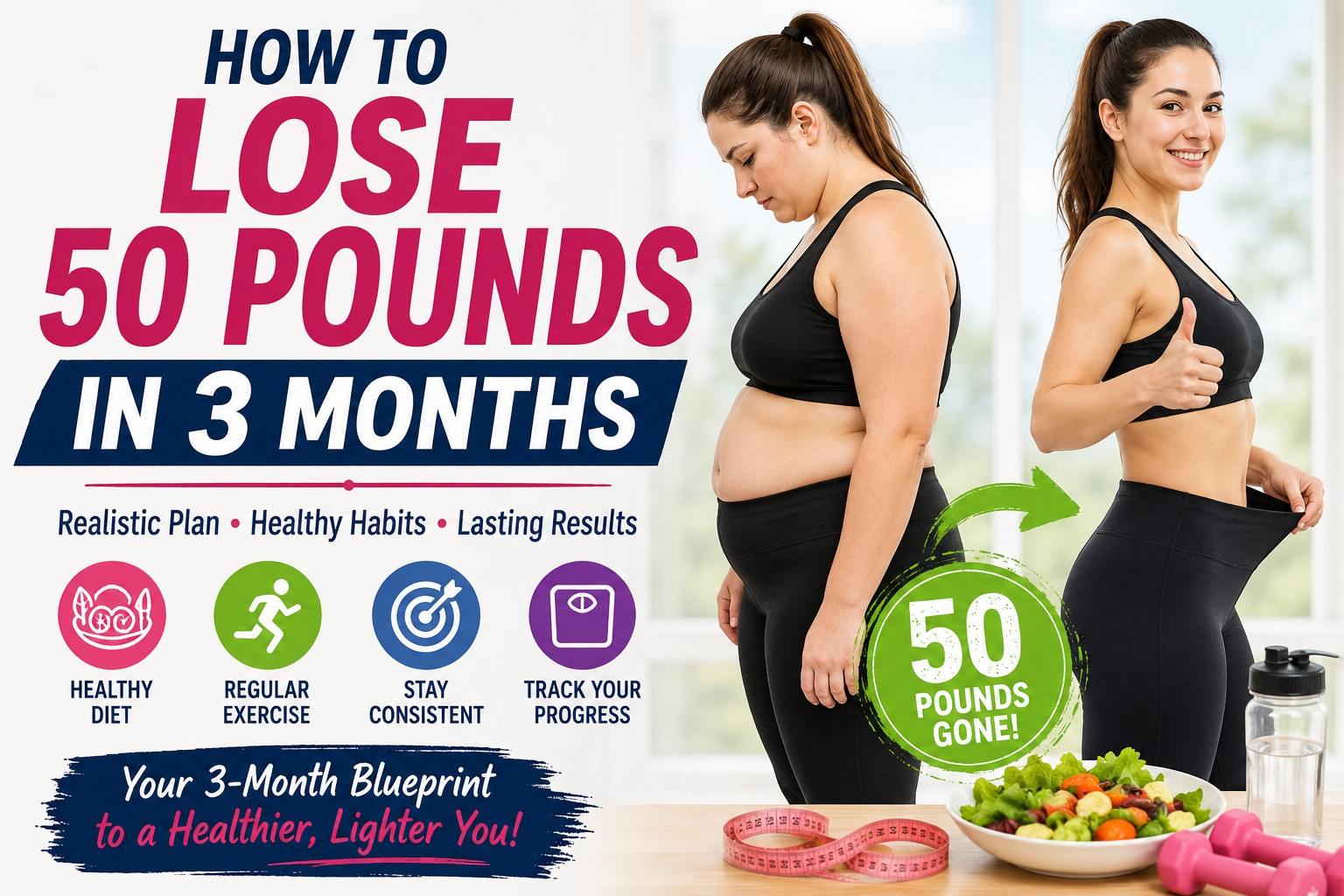
How to Lose 50 Pounds in 3 Months
Losing 50 pounds can be a major goal, but How to Lose 50 Pounds in 3 Months should not mean following extreme diets or pushing your body beyond its limits. A healthier approach is to understand what rate of weight loss may be realistic for you, create sustainable eating and exercise habits, and focus on reducing body fat while protecting your overall health. By combining nutritious meals, regular physical activity, adequate sleep, and consistent progress tracking, you can work toward meaningful weight loss without relying on unsafe shortcuts.
Understanding a 3-Month Weight Loss Goal
If you are searching for how to lose 50 pounds in 3 months, it is important to start with realistic expectations. Losing 50 pounds in approximately 12 weeks means averaging more than 4 pounds every week. That is considerably faster than the gradual rate generally recommended for most adults. The CDC notes that people who lose around 1 to 2 pounds per week are more likely to maintain their weight loss over time.
Therefore, instead of treating 50 pounds as a deadline, consider three months as the beginning of a longer-term weight-loss journey. You can still make meaningful progress during this period. More importantly, healthy changes can give you a foundation for continuing to lose weight afterward.
Is Losing 50 Pounds in 3 Months Realistic?
For most people, losing 50 pounds in three months is not a realistic target. At a rate of 1 to 2 pounds per week, a person might lose roughly 12 to 24 pounds over three months. Individual results vary because starting weight, activity level, food intake, medications, health conditions, and other factors can influence weight loss.
Some people with a much higher starting weight may experience faster weight loss during the early stages of a program. However, that does not mean everyone should attempt to reproduce those results.
Why Faster Is Not Always Better
Rapid weight loss can involve more than body fat. Some of the weight lost may come from water and lean tissue. Very restrictive diets can also make it difficult to consume enough nutrients.
According to MedlinePlus, losing more than 1 to 2 pounds per week is not considered safe for most people unless a healthcare professional is supervising an appropriate rapid-weight-loss approach. Potential problems can include muscle loss, fatigue, nutrient deficiencies, gallstones, and later weight regain.
Consequently, a slower approach may actually produce better long-term results.
Set a More Achievable Three-Month Goal
Rather than asking only how to lose 50 pounds in 3 months, ask what amount of weight loss is appropriate for your body and health.
A reasonable starting target may be 1 to 2 pounds per week. Over 12 weeks, that could equal approximately 12 to 24 pounds. However, your healthcare professional can help determine an appropriate goal based on your starting weight and health history.
Even if you do not reach 50 pounds after three months, you can still make significant progress. For example, losing weight while improving your food choices, strength, fitness, sleep, and daily activity can put you in a much better position for the following months.
Create a Moderate Calorie Deficit
Weight loss generally requires using more energy than you consume. However, creating an enormous calorie deficit is not the answer.
Instead, focus on moderate changes that you can maintain.
Start With Your Food Choices
You do not need to eliminate every food you enjoy. Instead, make your meals more filling and nutrient-dense.
Try building meals around:
- Lean protein such as chicken, fish, eggs, beans, or Greek yogurt
- Vegetables and leafy greens
- Whole grains and other high-fiber carbohydrates
- Fruit
- Healthy fats in reasonable portions
- Water and other low-calorie beverages
At the same time, reduce foods and drinks that provide lots of calories without keeping you full, such as sugary beverages, frequent desserts, oversized portions, and highly processed snacks.
This approach is easier to maintain than an extremely restrictive diet.
Prioritize Protein and Fiber
Protein can make meals more satisfying while helping support muscle during weight loss. Include a source of protein with breakfast, lunch, and dinner.
Fiber is also useful because high-fiber foods can add volume and help you feel satisfied. Vegetables, fruit, beans, lentils, oats, and whole grains are practical choices.
However, there is no need to follow an extreme high-protein or high-fiber diet. Your overall eating pattern matters more than one particular nutrient.
Drink More Water
Liquid calories can make weight loss harder without providing the same fullness as a balanced meal.
Replacing regular soda, sweetened coffee drinks, energy drinks, and other high-calorie beverages with water can be a simple way to reduce calorie intake.
You can also add lemon, lime, cucumber, or mint if plain water feels boring.
Remember, though, that hydration alone does not cause significant fat loss. It works best as part of a broader healthy lifestyle.
Exercise for Fat Loss and Fitness
Diet plays an important role in weight management, but physical activity can support your progress and improve overall fitness.
A combination of aerobic activity and strength training can be especially useful.
Walk More Every Day
Walking is one of the simplest ways to increase daily activity. You do not need to begin with extremely long walks.
Start with a manageable amount and gradually increase your time or distance.
For example, you could:
- Take a short walk after breakfast.
- Walk for 10 to 15 minutes after lunch.
- Take another walk in the evening.
- Choose stairs when practical.
- Add more movement during household activities.
Small increases can add up over the course of a week.
Add Strength Training
Strength training can help you maintain and build muscle while losing weight. You can begin with bodyweight movements such as squats, wall push-ups, lunges, and modified exercises.
As you become stronger, resistance bands or weights can provide additional challenge.
If you have an injury, medical condition, or significant mobility limitation, ask a healthcare professional about appropriate exercises before starting a new routine.
Get Enough Sleep
Sleep is often overlooked when people think about how to lose 50 pounds in 3 months, yet it is an important part of a healthy lifestyle.
Poor sleep can make it harder to maintain healthy eating and activity habits. Therefore, create a consistent bedtime routine and aim to give yourself enough time to sleep.
Try keeping your bedroom comfortable and limiting unnecessary screen use close to bedtime. A consistent schedule can also make healthy routines easier to maintain.
Manage Stress
Stress can affect eating habits, sleep, and motivation. Some people respond to stress by eating more frequently or choosing high-calorie comfort foods.
You do not need to eliminate stress completely. Instead, find healthier ways to manage it.
Walking, stretching, meditation, breathing exercises, hobbies, spending time with friends, and taking regular breaks can help create a more balanced routine.
Track Your Progress Without Obsessing
Tracking can help you understand whether your habits are working.
You can record:
- Body weight
- Waist measurements
- Daily steps
- Workouts
- Meals
- Sleep
- Energy levels
However, do not panic over a single day’s scale reading. Body weight naturally changes because of water, food intake, sodium, digestion, and other factors.
Look at the overall trend rather than focusing on every small fluctuation.
What If Weight Loss Slows Down?
Weight loss rarely happens in a perfectly straight line.
You may lose several pounds during one period and very little during another. If progress slows, avoid immediately cutting your food intake dramatically.
Instead, review your habits.
Are portions gradually getting larger? Have snacks increased? Are sugary drinks appearing more often? Has your activity decreased? Are you sleeping poorly?
Small adjustments may be enough.
Avoid Extreme Weight-Loss Methods
When people want to know how to lose 50 pounds in 3 months, they may encounter crash diets, starvation-style plans, detoxes, excessive exercise routines, and unregulated supplements.
These approaches can be tempting because they promise dramatic results. However, rapid weight loss can increase health risks and may be difficult to maintain.
Avoid plans that promise guaranteed results without considering your individual health.
You should also be cautious about products that claim to melt fat without dietary or lifestyle changes.
When to Talk to a Healthcare Professional
Before pursuing an aggressive weight-loss goal, consider discussing your plans with a doctor or qualified healthcare professional.
This is particularly important if you have diabetes, high blood pressure, heart disease, kidney problems, a history of eating disorders, take prescription medications, or have another medical condition.
A healthcare professional can help determine an appropriate calorie target, exercise plan, and rate of weight loss. Weight-management treatment can sometimes include structured lifestyle programs, medications, or other interventions when medically appropriate.
A Better Three-Month Weight-Loss Strategy
Instead of making the entire goal dependent on losing 50 pounds, divide your journey into smaller milestones.
Month 1: Build the Foundation
Focus on establishing consistent meals, reducing sugary drinks, walking regularly, improving sleep, and learning appropriate portion sizes.
Month 2: Increase Consistency
Once your routine feels easier, gradually increase physical activity and incorporate regular strength training.
Month 3: Strengthen Your Habits
Continue the habits that produced results. Rather than dramatically restricting calories, focus on consistency and preparing for the next stage of your weight-loss journey.
This approach can help you avoid the cycle of extreme dieting followed by overeating.
How Long Does It Take to Lose 50 Pounds?
At an average rate of 1 pound per week, losing 50 pounds could take around 50 weeks. At 2 pounds per week, it could take approximately 25 weeks, or about six months.
Your actual timeline could be shorter or longer. Starting weight and individual circumstances matter.
Therefore, if your goal is 50 pounds, think in terms of months rather than weeks. A longer timeline can give you more opportunity to establish habits that remain useful after the weight is gone.
The Bottom Line
Learning how to lose 50 pounds in 3 months should begin with realistic expectations rather than an extreme deadline. For most people, losing 50 pounds in 12 weeks is too aggressive. A gradual rate of approximately 1 to 2 pounds per week is generally considered more sustainable.
Instead, focus on a moderate calorie deficit, nutritious meals, adequate protein and fiber, regular walking, strength training, good sleep, and stress management. Most importantly, measure success by the healthy habits you build as well as the number on the scale.
If you need to lose 50 pounds, reaching that goal safely may take longer than three months. That is not failure. A slower journey can give you a better chance of maintaining the results for the long term.
Weight-Loss Product to Consider
If you want to add a supplement to your routine, LeanBiome is one weight-management supplement marketed toward people interested in supporting their weight-loss goals. However, supplements should not be treated as a replacement for a balanced diet, regular physical activity, or medical care. Evidence for individual weight-loss supplements can vary, so check the ingredients and discuss supplements with a healthcare professional if you take medications or have a medical condition.