



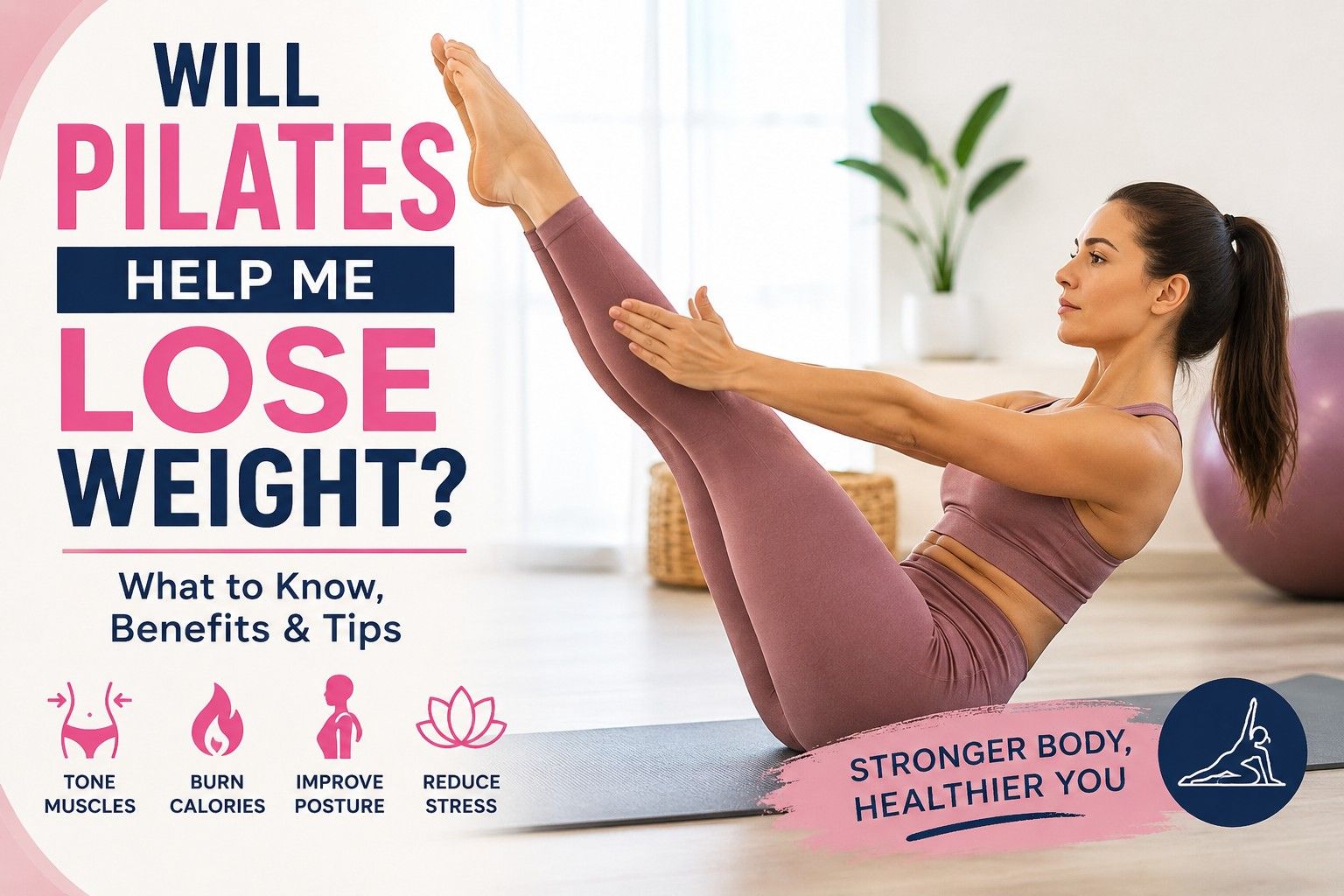
Will Pilates Help Me Lose Weight?
Want to lose weight without spending hours doing intense workouts? Will Pilates help me lose weight? This is a common question for people looking for a low-impact and sustainable way to become more active. Pilates may be worth adding to your routine because it can strengthen your muscles, improve movement, and increase your overall physical activity. However, understanding what Pilates can—and cannot—do for weight loss is important before expecting major changes on the scale.
Will Pilates Help Lose Weight?
Will Pilates help me lose weight is a common question among people looking for a low-impact way to become more active. The short answer is yes, Pilates can support weight loss, but it is unlikely to be a magic solution on its own.
Pilates involves controlled movements that work several muscle groups. As a result, regular sessions can contribute to your daily energy expenditure while helping improve strength, flexibility, balance, and body control.
However, weight loss generally depends on creating a calorie deficit over time. Physical activity can increase the calories your body uses, while a balanced eating pattern can help manage calorie intake. The Centers for Disease Control and Prevention also notes that physical activity and healthy eating work together when trying to lose weight.
Therefore, Pilates may work best as one part of a broader weight-loss routine rather than as your only strategy.
How Pilates Supports Weight Loss
Pilates is different from high-intensity cardio. Instead of focusing primarily on speed or maximum heart rate, it emphasizes controlled movements, posture, breathing, stability, and muscular endurance.
That does not mean it has no effect on calorie expenditure.
A 2026 systematic review found that typical Pilates sessions generally fall into the light-to-moderate intensity range. The researchers estimated an average energy cost of about 3.8 calories per minute, although the evidence was limited and varied between studies.
So, Pilates can contribute to your daily calorie burn. More importantly, it may be an activity that you enjoy and can perform consistently.
Pilates Helps You Stay Active
Consistency matters when trying to lose weight.
If traditional workouts feel uncomfortable, repetitive, or too demanding, you may stop doing them. Pilates can provide an alternative that encourages regular movement.
For example, you might complete a 30-minute Pilates session several times per week. Then, you could add walking or another form of aerobic activity on other days.
Over time, this combination can increase your overall activity level.
It Can Build Muscular Strength
Pilates uses body weight, resistance, and controlled movements to challenge muscles.
Regular practice may help strengthen the core, legs, hips, back, and other areas. Stronger muscles can make everyday movement easier and may help you become more physically active throughout the day.
However, Pilates should not be viewed as a replacement for every form of resistance training. If your goal is to build substantial muscle, a progressive strength-training program may be more appropriate.
Pilates for Weight Loss: What Does the Research Say?
Research on Pilates and body composition has produced mixed results.
A 2021 meta-analysis of randomized controlled trials involving adults with overweight or obesity found reductions in body weight, BMI, and body-fat percentage among participants doing Pilates. However, the researchers also noted that larger and better-designed studies were needed.
Other research is more cautious. A systematic review of healthy adults found that the evidence regarding Pilates and body composition remained uncertain because study results were inconsistent and many studies had methodological limitations.
Similarly, a 2020 systematic review found that mat Pilates was not clearly superior to traditional exercise or control conditions for improving body composition.
Therefore, Pilates appears promising, but it should not be presented as a guaranteed weight-loss workout.
Can Pilates Help Burn Belly Fat?
Pilates can strengthen your abdominal muscles, but it cannot specifically target belly fat.
This is an important distinction.
Exercises such as Pilates roll-ups, leg circles, planks, and other core movements can make the abdominal muscles stronger. However, doing more abdominal exercises does not automatically cause your body to remove fat from that particular area.
Instead, overall fat loss occurs as part of broader changes in energy balance.
As you lose body fat, your waistline may become smaller. At the same time, Pilates can help improve core strength and posture, which may make your midsection look and feel more toned.
So, if your goal is reducing belly fat, combine Pilates with a sensible calorie-controlled eating pattern and regular aerobic activity.
How Often Should You Do Pilates to Lose Weight?
There is no single Pilates schedule that guarantees weight loss.
However, beginners can start with two or three sessions per week and gradually increase their activity as their fitness improves.
For example:
Beginner Pilates Schedule
- Monday: 30-minute Pilates session
- Tuesday: Brisk walking
- Wednesday: Rest or light movement
- Thursday: 30-minute Pilates session
- Friday: Brisk walking
- Saturday: Pilates or another enjoyable activity
- Sunday: Rest
This approach gives you variety instead of relying on one exercise.
The CDC recommends that adults get at least 150 minutes of moderate-intensity aerobic activity each week, along with muscle-strengthening activity on at least two days. Your individual needs can vary, particularly when your goal is weight loss.
Because Pilates intensity can vary, it may be useful to combine it with walking, cycling, swimming, or another aerobic activity.
Is Pilates Better Than Cardio for Weight Loss?
Pilates and cardio serve different purposes.
Cardio activities such as brisk walking, cycling, swimming, and jogging can provide a stronger cardiovascular challenge and may burn more calories during a given period, depending on the activity and intensity.
Pilates, meanwhile, focuses heavily on muscular control, strength, balance, flexibility, and posture.
Therefore, you do not necessarily need to choose one.
A combination can be more practical.
For instance, you could use Pilates three days a week while walking most days. This gives you both muscle-focused exercise and additional aerobic movement.
Why Combining Exercises Can Help
A varied routine can also make exercise less boring.
You might enjoy Pilates on one day and take a long walk the next. Then, you can add strength training or another activity later in the week.
As a result, you may find it easier to stay active for months rather than exercising intensely for only a few weeks.
Pilates and Diet: Why Food Still Matters
Exercise is important, but your eating habits also have a major influence on weight loss.
It is possible to complete several Pilates sessions each week and still fail to lose weight if your overall calorie intake consistently exceeds your needs.
Instead of following an extreme diet, focus on nutritious foods that are satisfying and easy to maintain.
Consider including:
- Lean protein
- Vegetables
- Fruits
- Whole grains
- Beans and legumes
- Healthy fats
- Adequate water
Protein can be particularly useful because it helps support muscle maintenance and can make meals more satisfying.
At the same time, portion sizes matter. Even nutritious foods can contribute substantial calories when eaten in very large amounts.
How to Make Pilates More Effective for Weight Loss
If weight loss is your main goal, you can make your Pilates routine part of a larger strategy.
Increase Your Overall Movement
Do not limit your activity to your scheduled Pilates sessions.
Take short walks, use stairs when practical, stand up regularly, and look for opportunities to move throughout the day.
These small changes can add up.
Gradually Increase the Challenge
Once beginner Pilates becomes comfortable, consider progressing to more challenging movements or longer sessions.
You can also explore equipment-based Pilates if appropriate.
Progress should be gradual. You do not need to make every workout extremely difficult.
Add Aerobic Exercise
Walking is one of the simplest choices.
For example, you could take a brisk 20- to 30-minute walk after a Pilates session or on alternate days.
This can increase your overall activity without making your routine unnecessarily complicated.
Focus on Consistency
One intense workout will not transform your body.
A manageable routine performed consistently is much more useful.
Therefore, choose a Pilates schedule that fits your lifestyle. If three short sessions per week are realistic, start there instead of planning seven workouts that you cannot maintain.
What Results Can You Expect?
Your results will depend on factors such as calorie intake, activity level, starting weight, age, genetics, sleep, and consistency.
Some people may notice improvements in posture, flexibility, balance, and strength before seeing a significant change on the scale.
That is still progress.
Also, the scale does not tell the entire story. Your waist measurement, clothing fit, fitness level, strength, and how you feel during daily activities can provide additional information.
Most importantly, avoid expecting dramatic weight loss simply because you started Pilates.
The goal should be sustainable progress.
Who May Enjoy Pilates for Weight Loss?
Pilates can be particularly appealing if you prefer controlled, low-impact exercise.
It may suit people who:
- Enjoy structured workouts
- Want to improve core strength
- Prefer lower-impact movement
- Want to improve flexibility
- Get bored with traditional cardio
- Want to add variety to an existing routine
However, people with injuries, significant mobility limitations, or certain medical conditions should speak with an appropriate healthcare professional before starting a new exercise program.
A Simple Pilates Weight-Loss Strategy
If you want to use Pilates as part of your weight-loss plan, keep the approach simple.
Start with two or three Pilates sessions each week. Next, add regular walking or another aerobic activity. Then, focus on nutritious meals with appropriate portions and enough protein.
Finally, monitor your progress over several weeks rather than judging your results after a few days.
This approach is more realistic than expecting Pilates alone to produce rapid weight loss.
The Bottom Line
So, will Pilates help me lose weight?
Yes, Pilates can contribute to a weight-loss plan by increasing physical activity, supporting muscular strength, and helping you build a consistent exercise routine. Research suggests Pilates may improve body weight and body composition in some groups, although the evidence is not strong enough to consider it a standalone weight-loss solution.
For better results, combine Pilates with regular aerobic activity, a nutritious eating pattern, adequate protein, and consistent daily movement.
The best exercise is ultimately one you can perform regularly. If Pilates is enjoyable and sustainable for you, it can be a valuable part of your weight-loss journey.
Weight-Loss Product to Consider
If you’re already following a balanced diet and staying active with exercises such as Pilates, you may also consider LeanBiome as an optional supplement. It is marketed to support gut health and weight management, making it a potential addition to an overall healthy lifestyle.
However, a supplement should only complement your healthy habits. LeanBiome should not be used as a replacement for Pilates, regular physical activity, a balanced diet, or a calorie-controlled eating plan. For the best results, focus on consistent exercise, nutritious foods, adequate sleep, and sustainable lifestyle habits.