



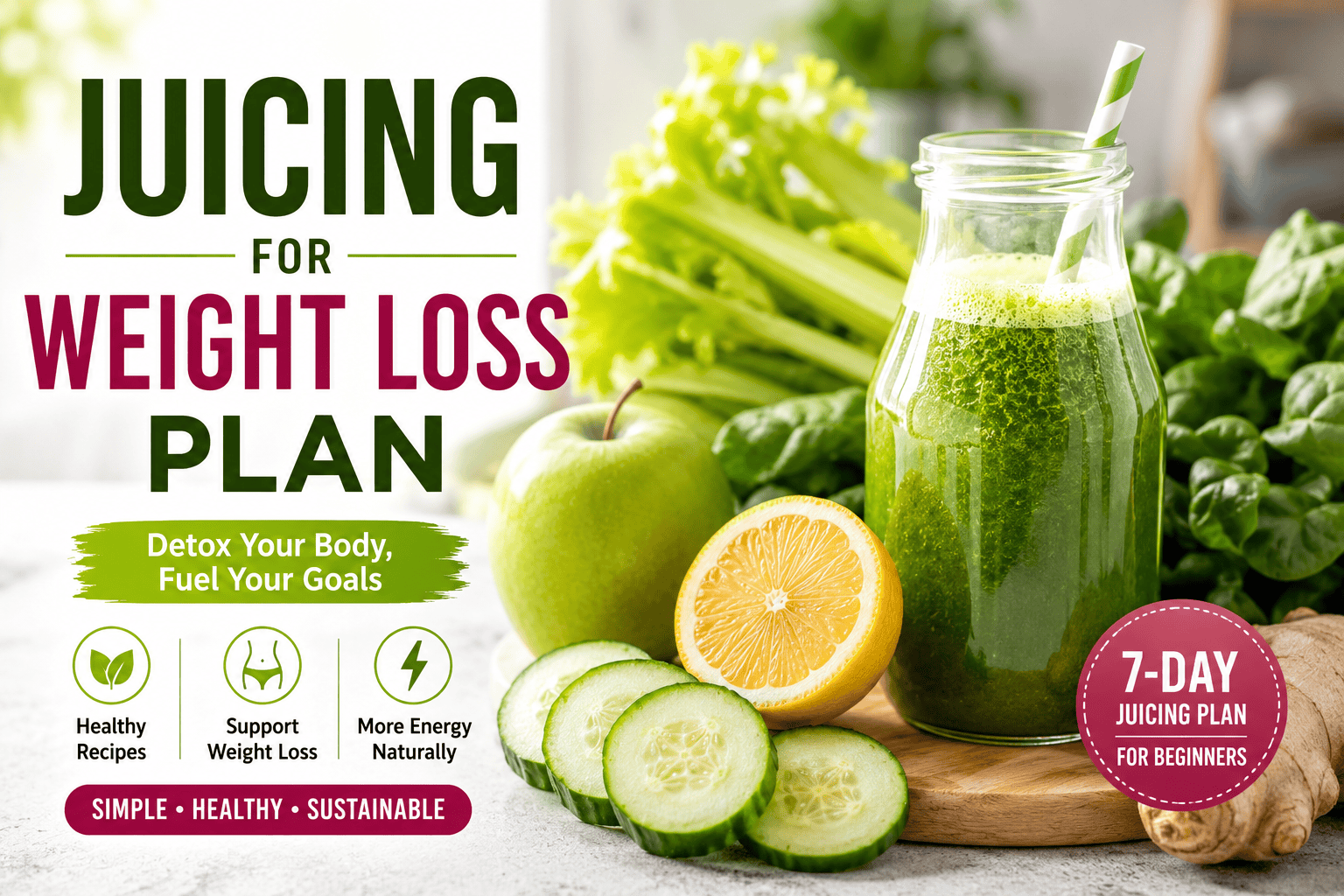
Juicing for Weight Loss Plan:
Have you been searching for a juicing for weight loss plan that is simple, realistic, and easy to follow? You’re not alone. Many people enjoy fresh fruit and vegetable juices because they can be a convenient way to include more vitamins, minerals, and antioxidants in their daily routine. However, successful weight management involves much more than drinking juice alone. A balanced approach that includes nutritious meals, regular physical activity, and healthy lifestyle habits is the key to lasting results.
This guide explains how to build a healthy juicing routine, choose the right ingredients, avoid common mistakes, and combine juices with balanced meals to support your overall wellness.
What Is a Juicing for Weight Loss Plan?
A juicing plan is a structured approach to adding freshly prepared fruit and vegetable juices to your daily diet. Rather than replacing every meal, many nutrition professionals recommend using juice as a complement to a balanced eating pattern.
A healthy juicing plan focuses on:
- Increasing vegetable intake
- Adding more vitamins and minerals
- Supporting hydration
- Reducing sugary beverages
- Encouraging healthier food choices
When combined with nutritious meals, adequate protein, healthy fats, and fiber-rich foods, fresh juices can be part of an overall healthy lifestyle.
Can Juicing Help With Weight Loss?
Fresh juice alone does not directly burn body fat. However, replacing high-calorie soft drinks or sugary beverages with vegetable-based juices may help reduce overall calorie intake for some people.
A balanced approach works best because it helps you:
- Eat more vegetables
- Stay hydrated
- Reduce processed foods
- Improve nutrient intake
- Feel motivated to maintain healthier habits
Weight loss generally occurs when your overall eating pattern supports a sustainable calorie deficit while still meeting your nutritional needs.
Benefits of Healthy Juicing
1. Increases Vegetable Intake
Many adults struggle to eat enough vegetables every day. Juicing makes it easier to include ingredients like spinach, cucumber, celery, kale, and carrots in one serving.
2. Provides Vitamins and Minerals
Fresh vegetables and fruits naturally contain nutrients such as:
- Vitamin C
- Vitamin A
- Potassium
- Folate
- Magnesium
These nutrients support overall health and wellness.
3. Encourages Better Hydration
Many fruits and vegetables contain a high percentage of water. Therefore, freshly prepared juices may contribute to your daily fluid intake alongside plain water.
4. Helps Replace Sugary Drinks
Replacing soda or sugar-sweetened beverages with homemade vegetable juices may reduce added sugar consumption and support healthier dietary habits.
5. Adds Variety to Your Diet
Trying different combinations of vegetables, herbs, citrus fruits, and berries keeps healthy eating enjoyable and encourages consistency.
Best Ingredients for a Healthy Juicing Plan
Choosing mostly vegetables while limiting high-sugar fruits helps create balanced juices.
Leafy Greens
Leafy greens are rich in nutrients while being naturally low in calories.
Good options include:
- Spinach
- Kale
- Swiss chard
- Romaine lettuce
- Parsley
Hydrating Vegetables
Hydrating vegetables create refreshing juices.
Examples include:
- Cucumber
- Celery
- Zucchini
- Lettuce
These ingredients also blend well with herbs and citrus fruits.
Flavor Boosters
Natural flavor enhancers improve taste without adding large amounts of sugar.
Popular choices include:
- Lemon
- Lime
- Fresh ginger
- Mint leaves
- Turmeric
Fruits to Use in Moderation
Fruit adds sweetness, but using too much may increase the natural sugar content of your juice.
Good choices include:
- Green apple
- Orange
- Berries
- Kiwi
- Pineapple
A simple guideline is to use more vegetables than fruit in most recipes.
Sample Beginner Juicing Schedule
Instead of replacing every meal, try adding one fresh juice to a balanced daily routine.
Morning
- Glass of water
- Green vegetable juice
- Protein-rich breakfast such as eggs, Greek yogurt, or oatmeal with nuts
Mid-Morning Snack
- Fresh fruit
- Handful of almonds or walnuts
Lunch
- Grilled chicken, fish, tofu, or beans
- Brown rice or quinoa
- Mixed vegetables
Afternoon
- Vegetable juice or herbal tea
Dinner
- Lean protein
- Steamed vegetables
- Sweet potato or whole grains
Evening
- Water or unsweetened herbal tea
This approach provides a mix of nutrients while allowing fresh juices to complement, rather than replace, balanced meals.
Three Easy Weight Loss Juice Recipes
1. Green Morning Juice
Ingredients
- 1 cucumber
- 2 handfuls spinach
- 2 celery stalks
- ½ green apple
- Juice of ½ lemon
- Small piece of fresh ginger
Blend or juice the ingredients and enjoy immediately.
2. Citrus Refresh Juice
Ingredients
- 2 carrots
- 1 orange
- ½ lemon
- Fresh ginger
This refreshing combination provides a naturally sweet flavor while including vegetables.
3. Berry Green Juice
Ingredients
- Spinach
- Cucumber
- Handful of blueberries
- Mint leaves
- Water
Blend until smooth for a refreshing afternoon drink.
Common Mistakes to Avoid
Many beginners make simple mistakes that can reduce the nutritional value of a juicing routine.
Avoid these habits:
- Drinking only juice all day without balanced meals
- Adding excessive fruit, which increases sugar intake
- Forgetting protein-rich foods
- Ignoring healthy fats from nuts, seeds, or avocados
- Relying on store-bought juices with added sugars
- Drinking juice instead of eating vegetables all the time
Making gradual, sustainable changes is generally easier to maintain than following highly restrictive plans.
Foods to Eat Alongside Fresh Juices
A healthy juicing routine works best when it complements balanced meals instead of replacing them. Whole foods provide protein, healthy fats, and fiber that fresh juices may not contain in significant amounts.
Consider including:
Lean Protein
Protein helps support muscle maintenance and can contribute to feeling full after meals.
Good options include:
- Skinless chicken breast
- Fish such as salmon or tuna
- Eggs
- Greek yogurt
- Tofu
- Lentils
- Chickpeas
- Black beans
Whole Grains
Whole grains provide complex carbohydrates and fiber for steady energy.
Examples include:
- Brown rice
- Oats
- Quinoa
- Whole-grain bread
- Whole-wheat pasta
Healthy Fats
Healthy fats are an important part of a balanced diet.
Choose foods like:
- Avocados
- Almonds
- Walnuts
- Chia seeds
- Flaxseeds
- Olive oil
Fiber-Rich Foods
Fiber supports digestive health and may help you stay satisfied between meals.
Include:
- Apples
- Pears
- Berries
- Broccoli
- Cauliflower
- Sweet potatoes
- Beans
Simple 7-Day Juicing Plan
This beginner-friendly schedule shows one way to include fresh juice as part of a balanced eating pattern.
Day 1
- Morning: Green Morning Juice
- Lunch: Grilled chicken salad
- Dinner: Baked fish with vegetables
Day 2
- Morning: Citrus Refresh Juice
- Lunch: Brown rice with mixed vegetables
- Dinner: Lentil soup and whole-grain bread
Day 3
- Morning: Berry Green Juice
- Lunch: Turkey or tofu wrap
- Dinner: Stir-fried vegetables with quinoa
Day 4
- Morning: Spinach and cucumber juice
- Lunch: Chickpea salad
- Dinner: Grilled salmon with broccoli
Day 5
- Morning: Carrot and ginger juice
- Lunch: Vegetable soup
- Dinner: Chicken with roasted vegetables
Day 6
- Morning: Kale and cucumber juice
- Lunch: Quinoa bowl with beans
- Dinner: Tofu with steamed vegetables
Day 7
- Morning: Green vegetable juice
- Lunch: Mixed salad with lean protein
- Dinner: Vegetable curry with brown rice
Remember to drink water throughout the day and adjust portion sizes according to your individual needs and activity level.
Lifestyle Habits That Support Weight Management
Fresh juice is only one part of a healthy routine. Lasting progress often comes from consistent daily habits.
Helpful practices include:
Stay Active
Aim for regular physical activity, such as:
- Walking
- Cycling
- Swimming
- Strength training
- Yoga
Sleep Well
Most adults benefit from around 7–9 hours of quality sleep each night. Good sleep supports overall health and energy levels.
Manage Stress
Long-term stress may influence eating habits. Activities such as meditation, deep breathing, reading, or spending time outdoors can help many people relax.
Drink Enough Water
Hydration supports normal body functions. Drinking water throughout the day is important, especially if you’re consuming more fiber-rich foods.
Frequently Asked Questions
Is juicing better than eating whole fruits and vegetables?
Whole fruits and vegetables generally provide more fiber, while fresh juices can be a convenient way to increase your intake of vitamins and minerals. Many people enjoy both as part of a balanced diet.
Can I replace every meal with juice?
Replacing all meals with juice for extended periods is generally not recommended. Balanced meals provide nutrients that juice alone may not supply.
Which vegetables are best for weight management?
Popular options include:
- Spinach
- Kale
- Cucumber
- Celery
- Broccoli
- Cabbage
- Carrots
How often should I drink fresh juice?
Many people enjoy one serving of fresh juice daily alongside balanced meals. Individual needs vary depending on overall diet and health goals.
Are store-bought juices healthy?
Some packaged juices contain added sugars or have less fiber than freshly prepared versions. Reading nutrition labels can help you make informed choices.
Final Thoughts
A practical juicing for weight loss plan is about building healthy habits—not relying on quick fixes. Fresh vegetable and fruit juices can add nutrients, variety, and hydration to your diet when paired with balanced meals, regular movement, and consistent lifestyle choices.
Focus on eating plenty of vegetables, choosing whole foods most of the time, staying active, and making changes that you can maintain over the long term. Small, sustainable improvements often have a greater impact than restrictive diets.
Looking for Additional Support on Your Weight Loss Journey?
Following a juicing for weight loss plan can be a great way to increase your intake of fruits and vegetables while building healthier eating habits. For some people, combining nutritious meals, regular physical activity, quality sleep, and consistent daily routines provides a solid foundation for long-term wellness.
Some adults also choose to include a dietary supplement as part of their overall health routine. One option you may come across is Mitolyn, a nutritional supplement designed to complement a balanced lifestyle. It is intended to be used alongside healthy eating and regular exercise—not as a replacement for them.
If you’re considering a supplement, take time to review the ingredients, follow the recommended directions, and choose products from reputable manufacturers. It’s also a good idea to speak with your healthcare provider before starting any new supplement, especially if you have an existing medical condition or take prescription medications.
Note: Results vary from person to person. No supplement can replace healthy nutrition, regular exercise, adequate sleep, and professional medical advice. A sustainable weight management plan is built on consistent healthy habits over time.