



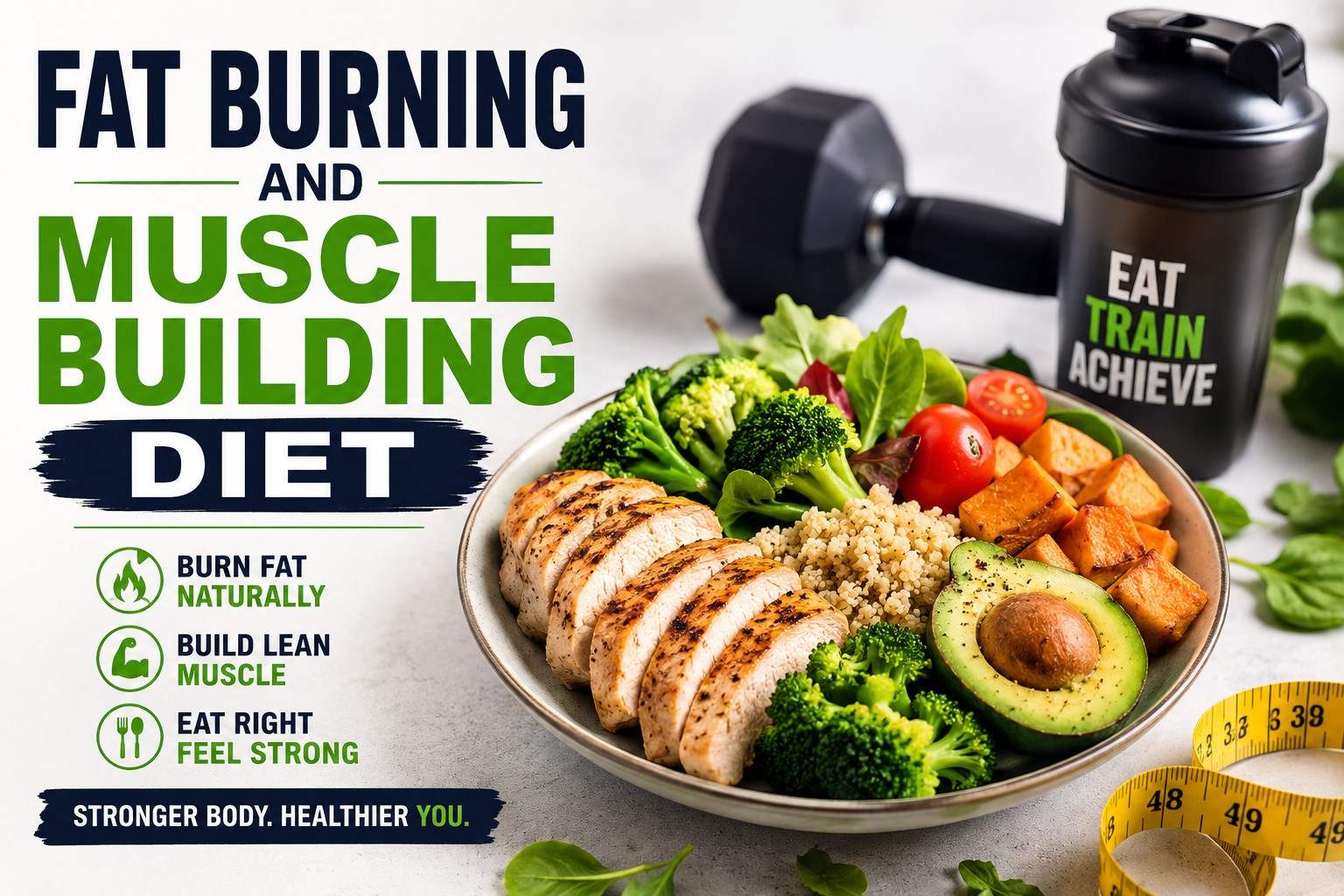
Fat Burning and Muscle Building Diet
Want to lose body fat while building a stronger, more defined body? A Fat Burning and Muscle Building Diet can help you work toward both goals by combining balanced nutrition, adequate protein, and healthy habits without relying on extreme dieting.
A fat burning and muscle building diet focuses on two important goals at the same time: reducing excess body fat and supporting lean muscle growth. Instead of drastically cutting calories, the goal is to eat enough nutritious food to support training while creating a reasonable calorie deficit when fat loss is the priority. In addition, adequate protein, resistance training, quality carbohydrates, healthy fats, and good recovery all play important roles.
However, achieving both goals requires patience. You may not see dramatic changes on the scale every week because muscle development and fat loss can happen at different rates. Therefore, it is better to monitor your waist measurement, strength, energy levels, and progress photos along with your body weight.
What Is a Fat Burning and Muscle Building Diet?
A fat burning and muscle building diet is a balanced eating approach designed to provide enough protein and nutrients for muscle maintenance or growth while supporting gradual fat loss.
First, protein helps provide the amino acids your body needs to repair and build muscle. Meanwhile, a controlled calorie intake can encourage your body to use stored energy. Carbohydrates can support exercise performance, while healthy fats contribute to overall nutrition and help make meals satisfying.
The key is balance.
Rather than eliminating entire food groups, focus on foods that provide protein, fiber, vitamins, minerals, and other essential nutrients. Then, combine your diet with consistent strength training and regular movement.
How Does Fat Loss and Muscle Gain Work?
Fat loss generally occurs when you consistently consume fewer calories than your body uses. However, building muscle requires adequate nutrition and an appropriate training stimulus.
Consequently, trying to lose weight as quickly as possible can make muscle retention more difficult. A moderate approach is often more practical.
Create a Moderate Calorie Deficit
If fat loss is your primary goal, a modest calorie deficit can help you gradually reduce body fat. You do not necessarily need to follow a very restrictive diet.
Instead, reduce calories by making practical changes. For example, choose lean protein instead of higher-fat cuts of meat, replace sugary drinks with lower-calorie beverages, and increase vegetables and high-fiber foods.
At the same time, avoid cutting calories so aggressively that you feel exhausted during workouts.
Prioritize Protein
Protein is one of the most important nutrients in a muscle-supporting diet. Good choices include:
- Chicken and turkey
- Eggs
- Fish and seafood
- Greek yogurt
- Cottage cheese
- Lean beef
- Tofu and tempeh
- Lentils and beans
- Protein-rich dairy products
Including protein at each meal can also help you feel fuller between meals. Furthermore, spreading protein throughout the day can make it easier to reach your daily intake.
Best Foods for a Fat Burning and Muscle Building Diet
The foundation of your diet should consist primarily of minimally processed foods. You can then adjust portions according to your calorie and protein needs.
1. Lean Protein Foods
Chicken breast, turkey, tuna, salmon, eggs, Greek yogurt, cottage cheese, tofu, and legumes can provide valuable protein.
Fish such as salmon also provides healthy fats. Therefore, including different protein sources throughout the week can make your meals more varied and nutritious.
2. High-Fiber Vegetables
Vegetables are useful because they provide fiber and nutrients while generally adding relatively few calories to meals.
Try spinach, broccoli, cauliflower, carrots, bell peppers, tomatoes, cucumber, green beans, and leafy greens. You can also combine several vegetables in salads, stir-fries, soups, and roasted meals.
3. Smart Carbohydrates
Carbohydrates are not automatically responsible for weight gain. In fact, nutritious carbohydrate sources can help provide energy for resistance training and other physical activities.
Consider:
- Oatmeal
- Brown rice
- Quinoa
- Potatoes
- Sweet potatoes
- Whole-grain bread
- Whole-grain pasta
- Fruit
Rather than removing carbohydrates completely, control portions and choose nutrient-rich options most of the time.
4. Healthy Fats
Healthy fats can contribute to a balanced diet and make meals more satisfying. Good choices include avocados, nuts, seeds, olive oil, and fatty fish.
Because fats contain more calories per gram than protein and carbohydrates, portion control is particularly important when your goal is fat loss.
Sample Fat Loss and Muscle Gain Meal Plan
A simple fat loss and muscle gain meal plan does not need to be complicated. The following example can give you an idea of how to structure your meals.
Breakfast
Start with oatmeal topped with berries and a serving of Greek yogurt. Alternatively, you could have eggs with whole-grain toast and vegetables.
This combination provides protein, carbohydrates, fiber, and other nutrients to help you start the day.
Lunch
For lunch, try grilled chicken with brown rice and a large serving of mixed vegetables. Add a small amount of olive oil or avocado for healthy fat.
As a result, you get a balanced meal without needing complicated ingredients.
Snack
A convenient snack could include Greek yogurt with fruit or a protein shake with a piece of fruit.
If you prefer whole foods, cottage cheese, boiled eggs, or a small serving of nuts can also work.
Dinner
For dinner, choose grilled salmon or lean chicken with roasted vegetables and a moderate serving of potatoes or quinoa.
Finally, drink water throughout the day and adjust portions based on your individual calorie requirements.
Why Strength Training Matters
Nutrition is only one part of the process. Resistance training gives your muscles a reason to adapt and become stronger.
Aim to include exercises such as squats, lunges, rows, presses, deadlifts, and other movements that work major muscle groups.
You do not have to train every day. Instead, establish a consistent routine that allows adequate recovery.
Progressive overload is also useful. Gradually increasing resistance, repetitions, or training difficulty can help you continue challenging your muscles.
Cardio for Fat Loss
Cardio can complement your nutrition and strength-training routine. Walking, cycling, swimming, jogging, and other activities can increase overall energy expenditure.
However, more cardio is not always better.
If excessive cardio leaves you exhausted and interferes with strength training, reduce the amount and focus on a sustainable routine. In addition, daily walking can be an easy way to increase physical activity without adding extremely demanding workouts.
Common Mistakes to Avoid
Even a well-designed fat burning and muscle building diet can become difficult to follow if you make your plan unnecessarily restrictive.
Eating Too Little
Severely restricting calories may lead to low energy, poor workout performance, and difficulty maintaining your routine.
Instead, aim for gradual progress.
Ignoring Protein
A diet based mostly on salads, fruit, or low-protein snacks may not provide enough protein to support your training goals.
Therefore, make a protein source part of most meals.
Eliminating Carbohydrates
Completely avoiding carbohydrates is unnecessary for most people. Whole grains, potatoes, oats, fruit, and other carbohydrate sources can fit into a balanced diet.
Focusing Only on the Scale
Your body composition can change even when your weight changes slowly. For this reason, track several measurements instead of relying exclusively on the scale.
Expecting Overnight Results
Fat loss and muscle development take time. Consequently, consistency is more valuable than constantly changing your diet every few days.
How to Make Your Diet Easier to Follow
Meal preparation can make healthy eating much simpler.
First, prepare several protein sources in advance. Next, wash and cut vegetables so they are ready to use. Then, cook a batch of rice, potatoes, or another carbohydrate source.
You can also prepare simple meals in containers for busy days.
Additionally, keep nutritious snacks available. When healthier choices are convenient, you are less likely to rely on highly processed foods when hunger strikes.
Hydration and Recovery
Water is another important part of your routine. Staying hydrated supports normal body functions and can make exercise more comfortable.
Sleep matters as well. During recovery, your body works to repair tissues and adapt to training. Therefore, try to maintain a consistent sleep schedule and give your muscles enough recovery time between demanding workouts.
Stress management can also help. Walking, stretching, relaxing hobbies, and adequate rest can make it easier to maintain healthy habits over time.
Can You Build Muscle While Losing Fat?
Yes, it is possible for some people to build or maintain muscle while losing body fat. This is sometimes called body recomposition.
However, results vary according to factors such as training experience, protein intake, calorie intake, sleep, genetics, and consistency.
People who are new to resistance training may see noticeable improvements relatively quickly. Meanwhile, experienced lifters may need a more carefully structured nutrition and training program.
Therefore, set realistic expectations and focus on long-term progress.
A Simple Daily Formula
You can keep your approach simple by building most meals around four components:
- Protein: chicken, fish, eggs, yogurt, tofu, or legumes.
- Vegetables or fruit: choose several varieties throughout the day.
- Quality carbohydrates: oats, rice, potatoes, quinoa, or whole grains.
- Healthy fats: nuts, seeds, avocado, olive oil, or fatty fish.
Then, adjust portion sizes according to your individual goals.
This approach is easier to maintain than following a complicated list of forbidden foods.
Weight Loss Product to Consider
If you struggle to get enough protein or need a convenient option between meals, a protein-based meal replacement or shake can be useful as part of an overall nutrition plan.
Lanta Flat Belly Shake can be considered as a convenient weight-management product, but it should complement—not replace—a balanced diet, regular physical activity, and healthy lifestyle habits. Always check the product’s current ingredient list and follow its label directions before using it.
Final Thoughts
A successful fat burning and muscle building diet is not about starving yourself or completely eliminating carbohydrates and fats. Instead, it is about creating a balanced nutrition strategy that supports gradual fat loss while providing the protein and nutrients needed for training and recovery.
Start by prioritizing protein, vegetables, fruit, nutritious carbohydrates, and healthy fats. Then, combine your diet with resistance training, regular movement, adequate sleep, and consistent hydration.
Most importantly, give your body time to adapt. Sustainable changes may appear slower than extreme diets, but they are generally easier to maintain. By focusing on consistency rather than perfection, you can build habits that support a leaner, stronger, and healthier body over time.